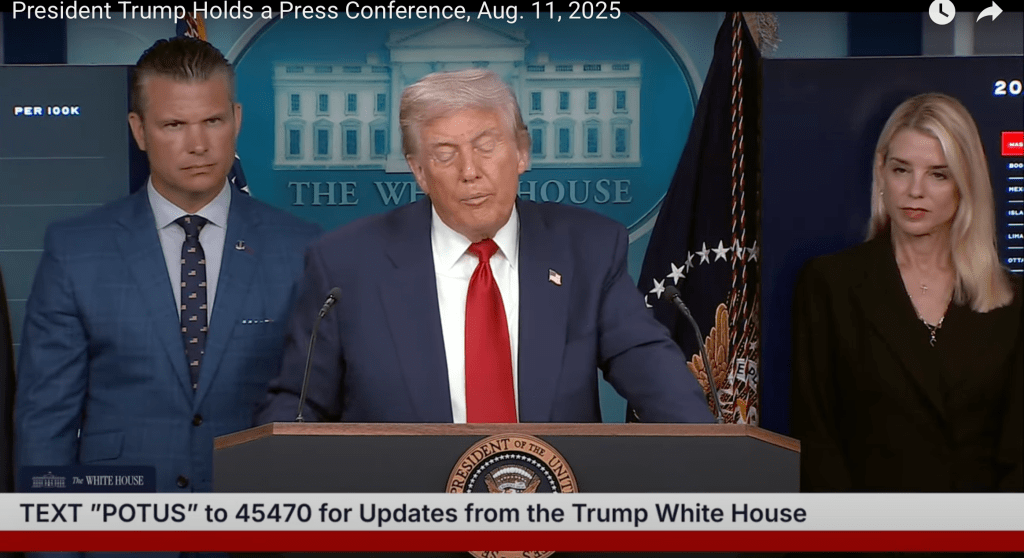
Washington DC. At a White House press conference on August 11, 2025, President Donald Trump acknowledged that his administration is “looking at” the possibility of rescheduling cannabis, signaling a potential shift in federal policy while affirming that a formal decision remains forthcoming. Trump described the matter as “very complicated,” citing both positive and negative feedback: “Some people like it… but for other things, I’ve heard some pretty bad things,” he said, before adding that a determination will be made “over the next few weeks”.
This announcement comes as the Department of Health and Human Services (HHS) and the Drug Enforcement Administration (DEA) already recommended reclassifying cannabis from Schedule I to Schedule III; a move reflecting its accepted medical use and lower abuse potential. Such a move could dramatically benefit the cannabis industry, including improved banking access, reduced tax burdens, and increased investor confidence. Yet despite these significant recommendations, the rescheduling process has been effectively stalled since it began in 2023.
New filings reveal that, over the past year, hearings were postponed, and bureaucratic delays have held progress in limbo. A DEA administrative law judge paused the proceedings six months ago, and the agency has not yet set a new schedule or moved forward decisively.
Ken Sobel, a cannabis legalization expert suggests that “without formal action from the DEA, the rescheduling effort remains symbolic”. Complicating matters further, Congress remains divided, and full federal legalization is still unlikely to gain traction in the near term.
At the August 11th conference, Trump also reiterated his longstanding support for medical cannabis access and decriminalization of small-scale possession. However, he stopped short of endorsing full legalization, an approach consistent with his previous more nuanced positions on the subject.
In sum, President Trump’s remarks marked a cautious nod toward reform and rescheduling. Yet while HHS and DEA have laid the groundwork for change, bureaucratic inertia keeps rescheduling on hold. Industry stakeholders remain hopeful, but without timely action from the administration, cannabis law reform may continue to move at a glacial pace.
 MMJ NEWS
Leave a comment